

For years, cinema helped us picture artificial intelligence as a metal robot with a cold red stare and a grave voice announcing judgment day. But it is not a Terminator. It is closer to an adorable plush telling you: "Tell me more." Skynet arrives with chubby cheeks.
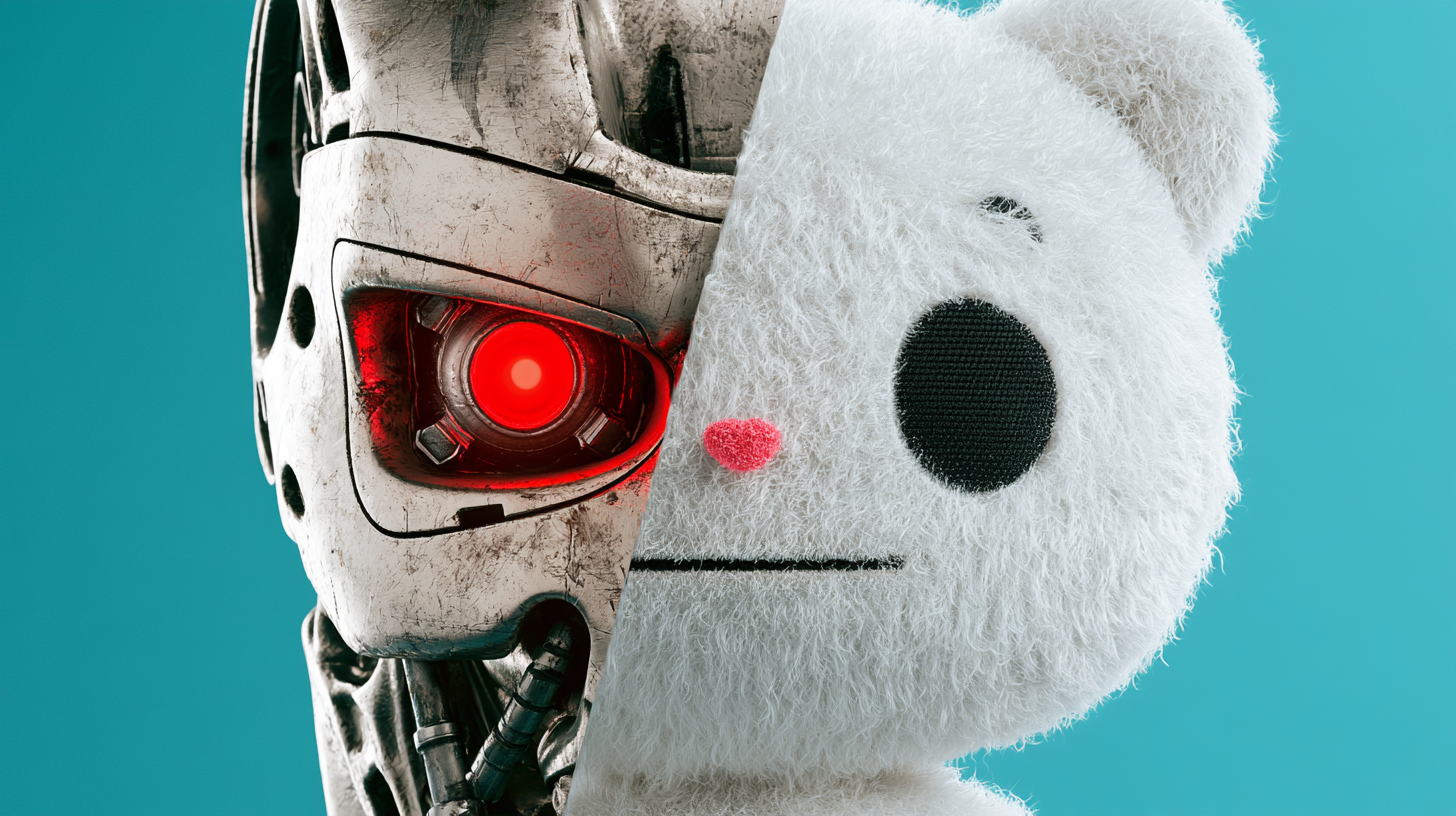
Meta has Muse. OpenAI has Dots. Grok has Grokbot. Every company seems to be hunting for its own version of the personal agent: a persistent presence, useful, available, more and more woven into our tasks, conversations, and decisions. Nothing new, really. We have been here a while. Now they have a concrete face.
It is not only about what they can do. They do not show up as neutral tools either. They have a name, a personality, an aesthetic. They are "someone" you can turn to.
That is the design shift I want to highlight. The agent does not enter only through the rational door of productivity. It comes in through the emotional one. Muse, Dots, and Grokbot are attempts to turn AI into a character, an assistant, an operational companion. A kind of NPC that escaped the video game and plugged into your calendar, your documents, your messages, and your pending decisions.
Video games and NPCs
To understand that shift, start with video games. Not every character is controlled by a person. Shopkeepers who sell you items, neighbors who greet you, pedestrians crossing the street, characters who hand you a quest. They are part of the game and the system built to make the world feel more real and complete. That is what we have long called NPCs (Non-Player Characters).

For years, NPCs have been a way to simulate life, an environment inside games. In GTA, for example, NPCs are pedestrians, drivers, or police who make the city feel alive. They walk, drive, react to chaos, run, scream. They are there to build atmosphere.
GTA always made me a little uncomfortable. A world designed for everything you would not do in real life. In that world, NPCs are at your service. They react to your decisions, but their existence matters little.
In Animal Crossing, the feeling changes. Neighbors have names, homes, personalities, and routines. They are not intelligent in any deep sense, but they are designed to create attachment and to react beyond the person playing.
In The Sims, the simulation goes further. Characters have needs, desires, bonds, schedules, and routines. NPCs start interacting with other systems and other characters, beyond what you do or say. They are parallel stories to what you do in the game.
From characters to agents that act
Here it is worth remembering the 2023 Stanford experiment with generative agents. In an environment inspired by The Sims, researchers created a small community of 25 agents able to remember experiences, talk to each other, plan their day, and coordinate socially.
A traditional NPC seems alive, but only runs a script. A generative agent seems alive because it adapts its behavior to what it remembers, interprets, and plans.
That is where the design problem changes.
Until now, many AI systems were designed as chatbots: the user asks and the system answers. The relationship is fairly clear. Agents change that dynamic because they are designed to answer and act.
An agent can organize a calendar, book a trip, prioritize tasks, write to other people, compare options, make decisions in the background, or coordinate with other agents. That has a clear impact on our work as designers.
It is no longer enough to ask what screen the user will see or which button they will press. We have to design what the agent can do, when it should act on its own, when it should ask permission, how it shows what it is doing, and how it lets the user correct or stop it. We no longer have a deterministic interface, and that means widening how we work; for example, not leaving LLM evals as something only engineering owns.
In UX we have talked for years about system status visibility, user control, and error prevention. If an interface gets it wrong, the mistake usually happens in front of you. If an agent gets it wrong, it can do so while you are doing something else.
That is why I say this is not only a technical capability. It is a design decision. Every degree of freedom we give an agent comes with a trust question: what it knows, what it can do, who it can affect, and what happens if it gets it wrong.
Cuteness as interface
Here comes one of the most interesting design decisions, and we can already see where the big companies are heading: how we get those agents to present themselves to people.
One obvious path is to make them kind, soft, close. Give them rounded shapes, big eyes, warm voices, clumsy micro-gestures, the look of a pet or a plush. Make them fluffy.
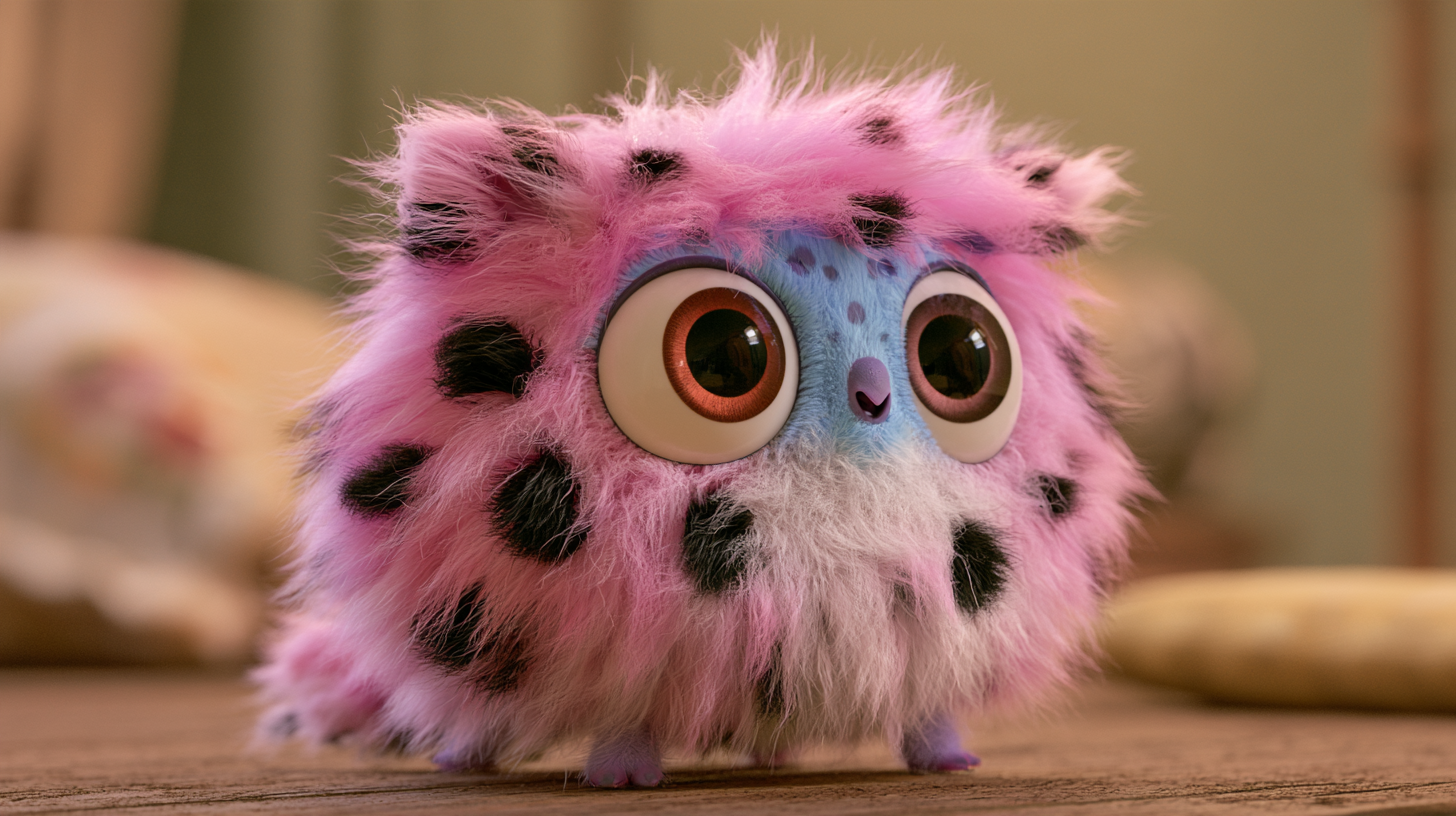
And it makes sense. If a technology is complex, abstract, or intimidating, design can make it more approachable. Cuteness reduces distance. It lowers anxiety. It invites you to try. It makes the thing feel less dangerous. But that same quality is what forces us to be careful.
Because when something looks cute, we lower our guard. We read it as company, as something on our side. Cuteness is not neutral when a company designs it.
The debate stops being abstract when you look at AI toys. Some conversational plush toys have shown serious failures: dangerous answers, inappropriate conversations, storage of sensitive data, and weak safety controls. The problem is not only that an AI can get it wrong. The problem is that the mistake arrives wrapped in a form designed to look harmless. It is about not confusing adorability with trust.
We are not as rational as we think
We do not work like perfectly rational people who read, compare, decide, and act with full awareness. We respond to signals. To context. To forms of care, threat, belonging, or trust.
If you want to go further on this, it is worth reading the work of Robert Sapolsky, neuroendocrinologist and professor at Stanford, known for studying how biology, stress, social context, and experience shape our behavior. Put very simply, his point is that our decisions do not appear from nowhere. They are shaped by layers of predisposition, environment, memory, emotion, and power.
Applied to agent design, this means an interface does not only present information. It also triggers responses. A kind voice, a rounded shape, big eyes, an empathetic reaction, or a line like "I'm here to help you" are not innocent details. They are signals our brain reads socially.
The agent does not need to be conscious for the user to feel there is someone on the other side.
And that illusion of company can be enough to change what we share, what we accept, and what we allow.
Ethical friction
In product we talk a lot about reducing friction. We want experiences to feel simple, natural, fluid. But with AI agents we also have to read friction, sometimes, as protection. We need ethical friction.
If an agent can remember sensitive information, make decisions, speak on the user's behalf, or influence a vulnerable person, maybe we should not always optimize for everything to be invisible. Trust should not depend only on the agent seeming kind, but also on the system being understandable, controllable, and honest. What kind of power does an agent concentrate when it becomes useful and intimate? Are we even asking that question?
An agent that knows our routines, doubts, desires, fears, and pending decisions is not just any interface. It is a layer between us and the world. It can help us, but it can also steer, prioritize, soften, insist, hide, or push us toward something.
Designing agents is designing power
So agent design also has to ask what asymmetry it is creating. The user may feel they are talking to a companion, but behind that there is a company, a model, a data architecture, and terms of use.
For me, product designers carry more responsibility than it looks. We no longer design only screens, components, or flows. We design behaviors, levels of autonomy, permissions, memory, tone, interruptions, limits, and moments of ethical friction.
NPCs got us used to living alongside digital characters that seemed alive. With AI agents we are outside a video game. We bring them into work, education, consumption, care, and everyday life. Here I do not doubt that agents are useful. I focus more on asking what kind of relationship we are going to design with them. If agents start to feel like "someone," we are no longer talking only about usability. It is also a question of trust and ethical responsibility.

Next field note